 HeySolids
Choking risk
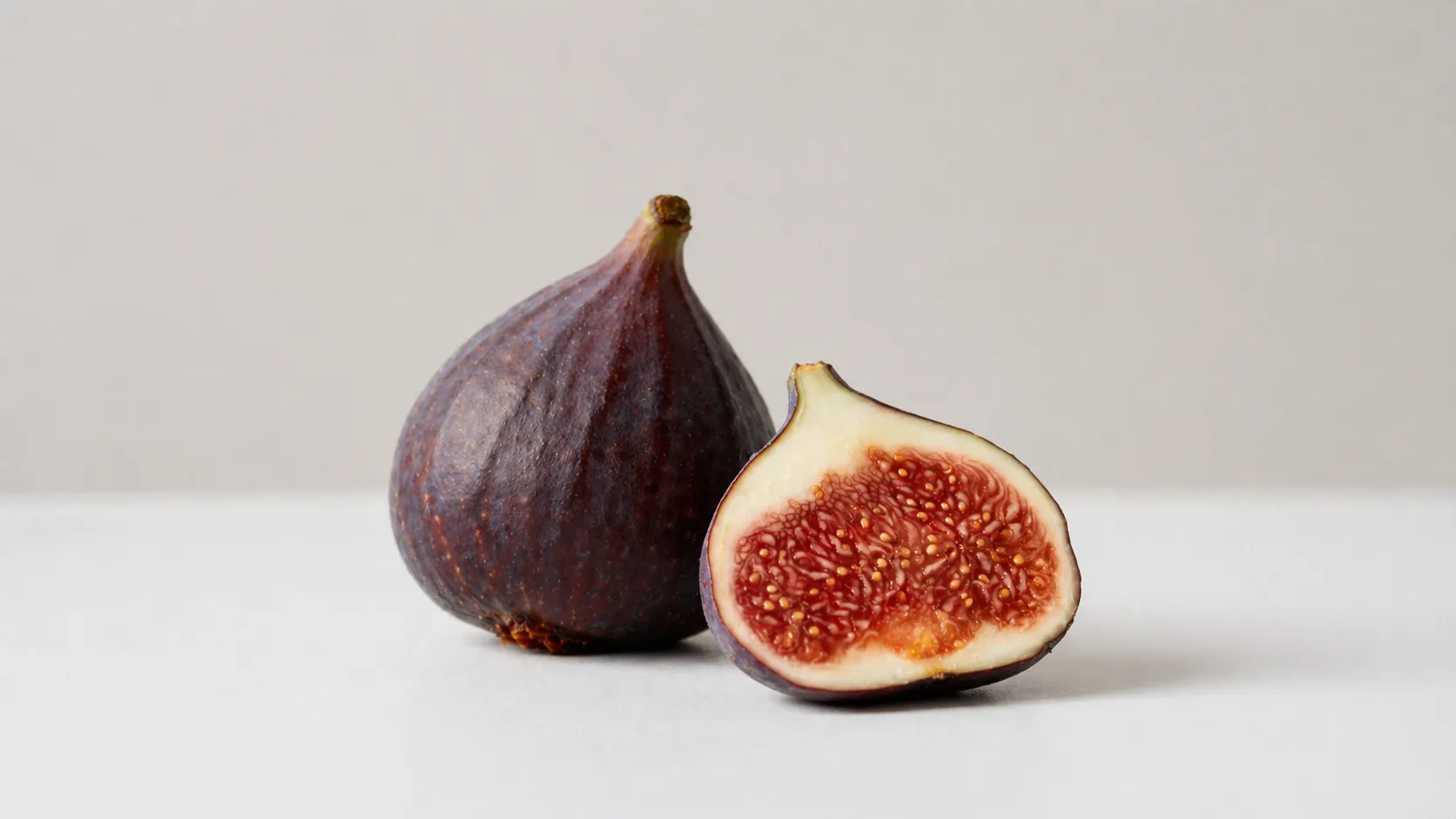
Fig is a moderate choking risk - ripe fresh flesh is soft, but the woody stem is tough and dried figs are dense, chewy, and sticky.
Remove the stem and serve ripe fresh fig as soft pieces or mash; soak or stew dried figs until soft and chop small, never whole. See how to serve for age-by-age prep.
Allergens
Fig is not a common food allergen, so a true food allergy to it is rare.[2]
Start with a small amount and watch for a reaction.
If baby refuses
Figs are sweet and jammy, so refusals are usually about the texture or the seeds. Try stirring the mashed flesh through oatmeal or plain yogurt, or fold a little soaked, mashed dried fig into a food baby already likes.
How to serve
6+ months old
Large soft half or smooth mash
Half a ripe fig, stem removed, or mashed flesh on a spoon
Pick a very ripe, soft fig, twist off the woody stem, then halve it lengthwise so baby can gnaw the flesh, or mash the inside into oatmeal or plain yogurt. To use a dried fig, soak or stew it soft, remove any tough stem, then puree and stir a small amount through familiar foods. Start with a little, since figs are high in fiber and can loosen stools.
How to cook
Ripe fresh figs need no cooking - just remove the stem. For dried figs, simmer in water for about 15 minutes until plump and very soft, then puree with a little of the liquid until smooth.
9+ months old
Quartered ripe fig or chopped soaked dried fig
Lengthwise quarters, or soft pieces about 1/2 inch
As the pincer grasp develops, snip the stem off a ripe fig and cut it into lengthwise quarters for picking up, or into soft pieces about ½ inch. The flesh should press easily between two fingers. Soak or stew dried figs until soft, remove the tough stem, then finely chop them into oatmeal or yogurt - no whole or large sticky pieces yet.[1] And because dried fruit is sugary and clings to teeth, offer dried figs as part of a meal rather than as a between-meal snack.
How to cook
Fresh figs need no cooking - snip off the stem and quarter lengthwise. Cover dried figs with hot water and leave until plump and very soft, or stew them briefly, then remove the stem and chop finely.
12+ months old
Small soft pieces at mealtimes
Bite-sized soft pieces, about 1/2 inch
Offer ripe fresh figs in small pieces or quarters at mealtimes, stem removed. The skin can be a little chewy, so expect some spitting as your child learns to manage it. Dried figs stay tough and sticky, so keep softening and chopping them small, and serve with meals rather than as a frequent snack.
How to cook
Serve ripe fresh figs raw, stem removed, or bake them soft and stir into oatmeal or yogurt. Soak or stew dried figs until soft and chop small. Because dried fruit is sugary and sticky, give figs with meals and keep portions small.
Tips
- Ripe means soft and drooping. A ready fig gives to gentle pressure, hangs heavy, and may show a drop of nectar at the base - a firm fig was picked too soon and won't ripen much at home. If it smells honeyed at the stem, buy it.
- A split skin is fine; a sour smell is not. Ripe figs often crack - that's ripeness, not spoilage. But figs turn fast: any sour or fermented smell means the batch is past it, so buy only what you'll use in a day or two.
- Check dried figs for the hard tip. Even after soaking, the stem end stays woody - snip it off every fig, the same habit as the tail on shrimp: make it the first step, before chopping, so it can't get lost in the mix.
Sources
- Choking Hazards (Infant & Toddler Nutrition) - CDC
- Food Allergies (the 9 major US allergens) - FDA
- Latex Allergy and Foods (latex-fruit syndrome) - Allergy & Asthma Network
- When, What, and How to Introduce Solid Foods - CDC
- Foods and Drinks to Avoid or Limit (honey, added sugar, salt) - CDC
- Figs, raw (FDC 173021) - USDA FoodData Central