 HeySolids
Choking risk
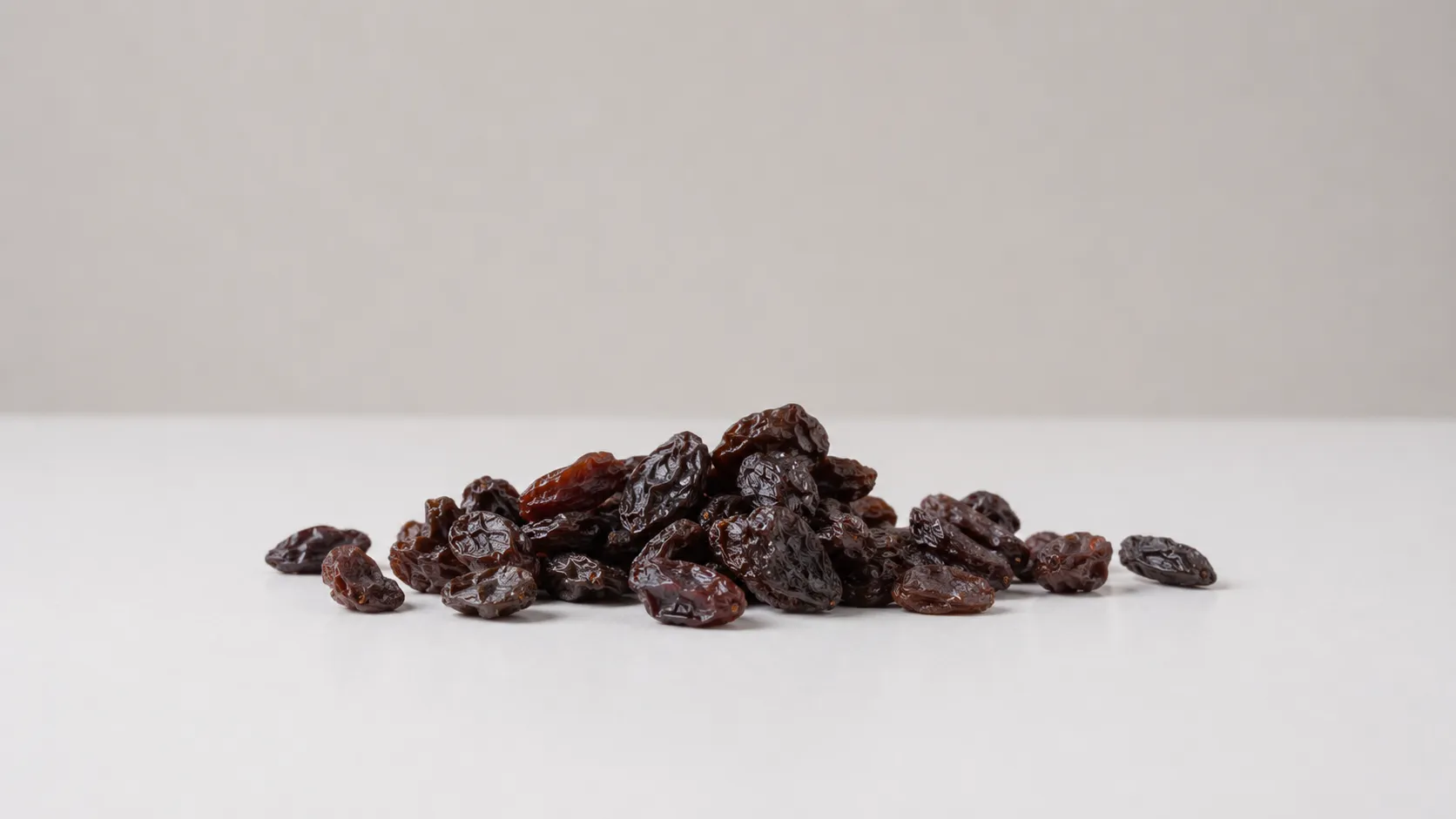
Raisins are a high choking risk - small, sticky, and chewy, they can clump together in the throat, and the CDC lists uncooked dried fruit like raisins among its choking hazards for young children.
Soak raisins until soft, then chop them or mash them into other foods. Skip loose, whole raisins until around age 4, when chewing is much stronger. See how to serve for age-by-age prep.
Allergens
Raisins are not a common food allergen, so a true allergy to them is rare.[3]
Start with a small amount and watch for a reaction.
If baby refuses
Raisins are intensely sweet, so refusal is usually about the chewy texture rather than the taste. Stir finely chopped or mashed soaked raisins through oatmeal or yogurt, or bake a small amount into soft muffins. Keep portions small - raisins are concentrated, so a little goes a long way on both sugar and fiber.
How to serve
6+ months old
Soaked and finely chopped or mashed
Small amounts stirred into other foods
Stir a small amount of soaked, finely chopped or mashed raisins through plain yogurt, oatmeal, or a fruit mash, or bake them into a soft food. No loose, whole raisins yet.[1] Raisins pack a lot of fiber into a very small piece, so keep portions modest at first - too much at once can make baby gassy.
How to cook
Cover raisins with hot water and leave for 15 to 20 minutes, until plump and very soft. Drain, then chop finely or mash before mixing into other foods.
12+ months old
Finely chopped, mixed into food
Chopped raisins in meals and baking
Keep serving raisins soaked and finely chopped, stirred through meals or baked into soft foods. Even chopped, the pieces are sticky enough to clump together, so whole raisins still wait - softened or not. And because dried fruit is sugary and clings to teeth, offer raisins as part of a meal rather than as a between-meal snack.
How to cook
Cover raisins with hot water and leave for 15 to 20 minutes, until plump and very soft, then drain and chop finely. If the raisins are going into something moist - oatmeal, yogurt, muffin batter - you can skip the soak and just chop them small.
Tips
- Check the label before you buy. Plain raisins should list one ingredient - grapes. Some brands are coated in oil or extra sugar, and yogurt-covered raisins are a candy, not a fruit.
- Soak a batch ahead. Softened raisins keep for a few days in a covered container in the fridge, so you can soak a handful once and chop them into breakfasts through the week.
- Use them as a sweetener. Mashed soaked raisins can sweeten muffins, oat bars, and porridge instead of added sugar - useful in the first year, when baking should have no sugar added.