 HeySolids
Can babies have processed cheese?
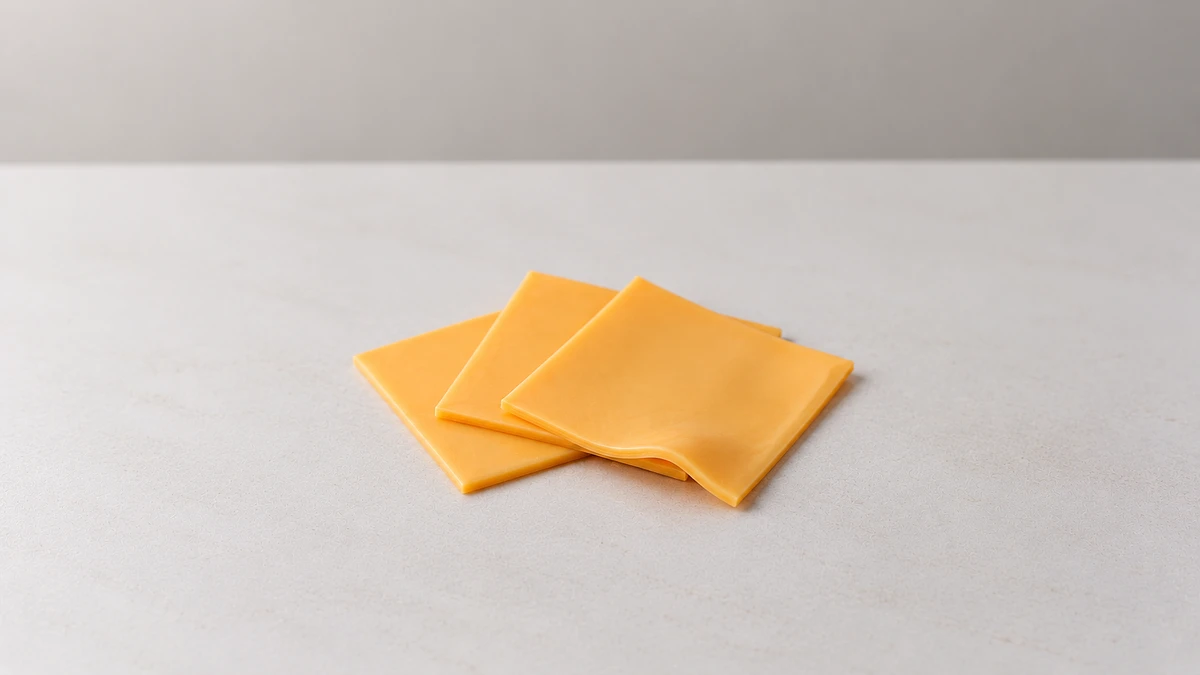
Yes, from around 6 months, in small amounts. Processed cheese is real cheese that’s been melted, blended with emulsifying salts and heated, so every slice, wedge and spread is pasteurized; there’s no raw-milk concern. The problem is salt. A single slice of American cheese has around 300 to 350 mg of sodium, close to a baby’s whole-day guide of 370 mg at 7 to 12 months.[1][2][3]
Unlike chicken nuggets or fish sticks, processed cheese is still mostly cheese, and the portion a baby needs is tiny. A strip torn from a quarter of a slice has around 80 mg of sodium, a small share of the day, so it doesn’t need to wait until 12 months the way salty processed meals do. In the first year, offer a strip like that, or a thin layer of spreadable cheese like Laughing Cow on toast, never a whole slice or wedge. Lower-sodium slices are worth looking for.
Babybel is different: it isn’t processed cheese but a firm, Edam-style cheese, and the issue there is its round shape, not what’s in it. Cut it into thin slices and never serve it whole.
Choking risk
Slices and spreads are a low choking risk - they're soft and tear easily - but a whole Mini Babybel is a moderate one: firm, round and the right size to block an airway.
Tear slices into thin strips, spread soft cheese thin, and grate a Babybel or cut it into matchsticks rather than handing it over whole; melted cheese should be a thin layer, not a clump. See how to serve for each age.
Allergens
Processed cheese is made from cow's milk, a common food allergen and one of the most common allergies in babies.[5][6]
If baby already eats cheese or yogurt, this is nothing new. If not, a thin strip is a fine way to introduce dairy - offer it earlier in the day and keep dairy in the diet once it's in. A baby with a known milk allergy will react to every version, including the ones labeled "cheese product".[7]
As with any new food, start with a small amount and watch for a reaction.
Food safety
Salt is the main thing to manage. Count the cheese as the salty food of the day, and keep the rest of the plate unsalted.[3] For Babybel, peel off all the red wax before cutting it. The wax isn’t food, and a piece of it can get stuck.
Check the label once. “Pasteurized prepared cheese product” contains less real cheese than “pasteurized process cheese”. Both are safe, but neither gives as much calcium and protein for the salt as plain cheese or yogurt.
How to serve
6+ months old
A thin strip torn from a slice, or a scrape of spread
About a quarter of a slice, in strips
Tear a slice into thin strips baby can pick up, or spread a thin scrape of soft cheese on a toast finger. A quarter to a third of a slice is plenty - a whole slice is close to a day's sodium. Grate a Babybel finely or cut it into matchsticks; never a whole one.
12+ months old
Half a slice, or a wedge spread thin
Half a slice, or one wedge
Half a slice in a sandwich or melted over vegetables, or a wedge of soft cheese spread on toast, fits inside a toddler's 800 mg sodium day if the rest of the meal is unsalted. Babybel still goes in matchsticks or thin slices - a whole one is for later, once chewing is strong.
How to prepare
Melt a thin layer onto toast, beans or broccoli, or cut into strips for a lunchbox. Peel the wax off completely before cutting.
Sources
- 21 CFR 133.169 Pasteurized process cheese (heated to at least 150°F for 30 seconds; emulsifying agents; salt) - eCFR
- Cheese, pasteurized process, American (about 1,400-1,700 mg sodium per 100 g) - USDA FoodData Central
- Dietary Reference Intakes for Sodium and Potassium (AI 370 mg at 7-12 months, 800 mg at 1-3 years) - National Academies 2019
- Foods and Drinks to Avoid or Limit (honey, added sugar, salt) - CDC
- Food Allergies (the 9 major US allergens) - FDA
- Milk - FARE
- When to Introduce Egg, Peanut Butter & Other Common Food Allergens - AAP HealthyChildren