 HeySolids
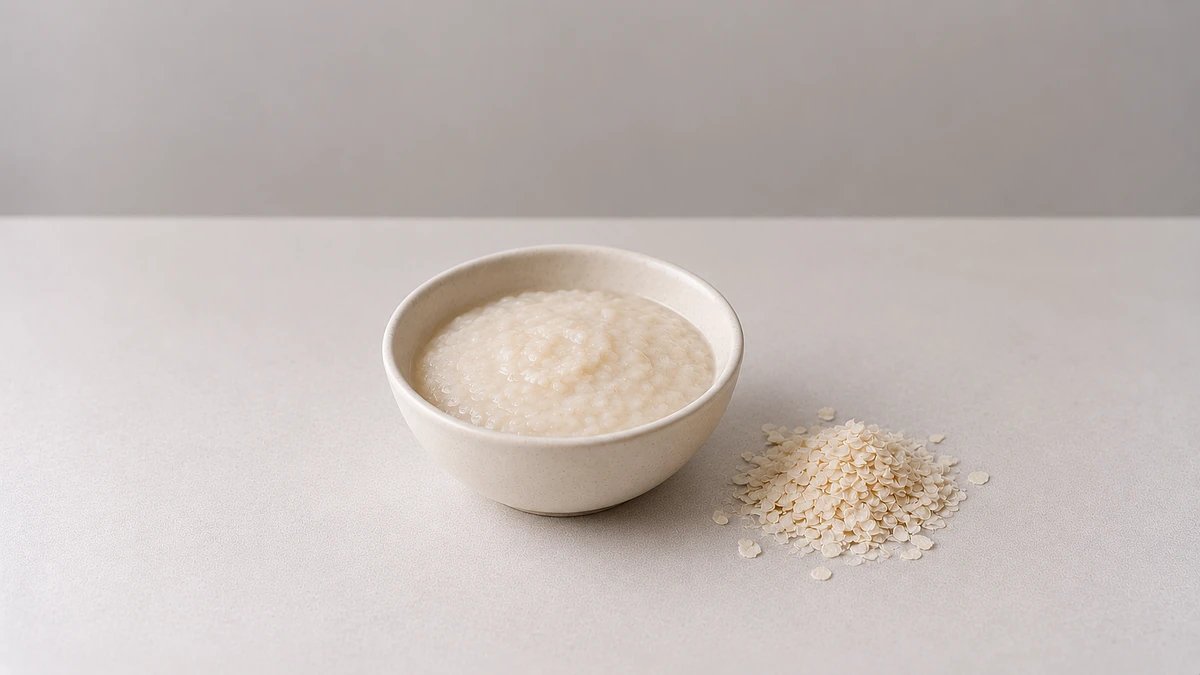
Can babies have rice cereal?
Yes, from around 6 months. It’s often the first or only cereal babies get,[3] but it doesn’t have to be. The AAP says first foods are up to you, and the CDC says there’s no set order.[1][2]
The catch is arsenic. Rice absorbs more of it from the soil and water than other grains, so the FDA set a limit of 100 ppb of inorganic arsenic for infant rice cereal. The CDC says that feeding only rice cereal increases a baby’s exposure, so let oat, barley or multigrain cereal take most turns.[4][3][1]
Used that way, it’s still a good choice. Iron-fortified cereal is one of several good iron sources, alongside puréed meat, beans and lentils. Half an ounce of dry rice cereal has about 8 mg of iron and 1.6 mg of zinc.[6][7][2]
Choking risk
Mixed thin and smooth, rice cereal is a low choking risk - it is a spoonable puree with nothing in it to block an airway.
Serve it from a spoon, thin at first and thicker as baby learns, and never through a bottle nipple unless your pediatrician advises it for reflux. See how to serve for age-by-age texture.
Allergens
Rice is not a common food allergen, so a true allergy to rice cereal is rare.[8]
Flavored and multigrain boxes are another matter: if one contains wheat, milk or soy, US law requires the label to name it, so check before you buy.[8] Offer each new grain on its own first, so wheat comes before a blend that mixes it in.[1]
Start with a small amount and watch for a reaction.
If baby refuses
No need to push it: iron-fortified oatmeal or barley cereal, or pureed meat, are good iron sources too.[6] To keep rice in the rotation, offer it again another day, or let baby grab a pre-loaded spoon and steer it in.
Food safety
Brown or organic rice cereal is not the safer pick. Brown rice tends to have the highest arsenic levels, and organic foods often contain heavy metals at levels similar to conventional ones. Skip rice milk and brown rice syrup, a sweetener in some processed toddler foods, for the same reason.[4]
Cereal does not go in a bottle: it will not help a baby sleep through the night, it adds calories a baby does not need, and a thickened bottle can make a baby choke. The one exception is reflux, if a pediatrician directs it - a medical call, not a sleep trick.[5][2]
How to serve
6+ months old
Thin, smooth cereal from a spoon
A teaspoon or two of dry cereal, mixed with breast milk or formula
Stir a teaspoon or two of iron-fortified rice cereal into warm breast milk, formula or water until it’s thin, runny and smooth. Offer it from a spoon, or hand your baby a pre-loaded spoon to hold. A few spoonfuls is a full meal at this stage.
How to serve
Mix it fresh each time. It thickens as it sits, so add a splash more liquid to loosen it. The FDA says oat, barley or multigrain cereal can be a first cereal too, so use those most of the time and rice least often.
9+ months old
Thicker cereal with fruit or vegetables stirred in
A few tablespoons, thick enough to sit on a spoon
Use less liquid now so the cereal holds on a spoon, and stir in mashed banana, pear or a spoonful of pureed vegetables for flavor and texture practice. A thicker mix also clings to a spoon baby is learning to hold. Keep rice the occasional bowl, with oat, barley or multigrain on most days.
How to serve
Warm liquid first, then cereal, then the fruit or vegetable, stirred until there are soft lumps but no dry clumps. A few mashed berries or a little orange on the side helps baby absorb the cereal's iron, since vitamin C boosts uptake of plant and fortified iron.
12+ months old
One of several breakfast grains
A small bowl
Rice cereal can stay on the menu as one of several grains. Many families move on to oatmeal and other breakfasts, like barley porridge, scrambled eggs or toast strips.
How to serve
Make it thick enough to hold on a spoon, top it with fruit instead of sugar, and let your toddler hold the spoon. Across the week, swap in oatmeal, quinoa, farro, couscous or bulgur. The AAP suggests all of these as ways to vary grains and cut down on exposure to metals.
Tips
- Keep a second box on the shelf. Let oat, barley or multigrain cereal fill most of the week's bowls, so rice gets the fewest turns.
- Check the label for added iron. The fortification is the point of the box - a cereal without it is just ground rice.
Sources
- When, What, and How to Introduce Solid Foods - CDC
- Starting Solid Foods - AAP HealthyChildren
- Action Level for Inorganic Arsenic in Infant Rice Cereals - FDA
- Heavy Metals in Baby Food: Reducing Risk of Exposure (rice absorbs more arsenic; brown rice highest; organic similar) - AAP HealthyChildren
- Baby Food & Feeding (cereal in a bottle will not help sleep) - AAP HealthyChildren
- Iron (Infant & Toddler Nutrition) - CDC
- Babyfood, cereal, rice, dry fortified (FDC 170969) - USDA FoodData Central
- Food Allergies (the 9 major US allergens) - FDA
- Food Protein-Induced Enterocolitis Syndrome (FPIES) - Allergy & Asthma Network