 HeySolids
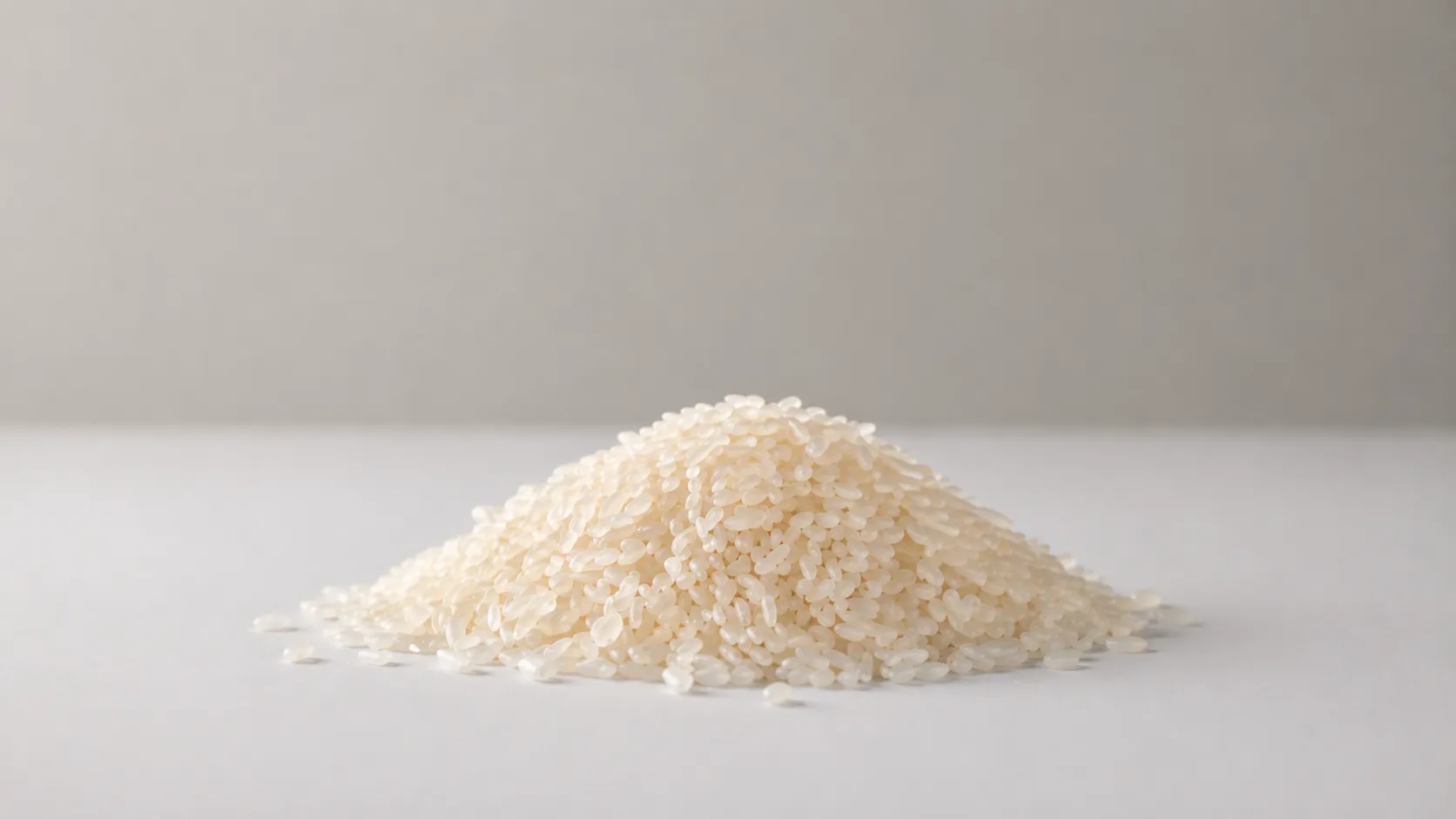
Choking risk
Soft, well-cooked rice is a low choking risk - the grains are tiny and squash easily.
Cook rice soft, and if loose grains are hard to manage, mash them or stir them into sauce or mashed vegetables so they clump. Skip firm rice products like mochi and rice cakes. See how to serve for age-by-age prep.
Allergens
Rice is not a common food allergen, so a true allergy to it is rare.[2]
It's also naturally gluten-free, a handy grain for families avoiding wheat or gluten.
Start with a small amount and watch for a reaction.
If baby refuses
Rice is usually well accepted. If yours turns it down, try a short-grain or sushi rice that's easier to grab, cook it into a soft congee, or stir it through a favorite sauce.
Food safety
Rice takes up more of a natural contaminant called inorganic arsenic from soil and water than most grains do. It's a small amount, but since babies eat a lot of rice for their size, the FDA and AAP advise against making rice the only grain you serve.[4][5]
It still fits a varied diet - just rotate in other iron-fortified grains like oat or barley instead of leaning on infant rice cereal, and cook rice in plenty of extra water to lower its arsenic.
Don't give rice milk as a main drink under age 5 - it's low in the fat and protein they need, and carries the same arsenic concern.[3]
How to serve
6+ months old
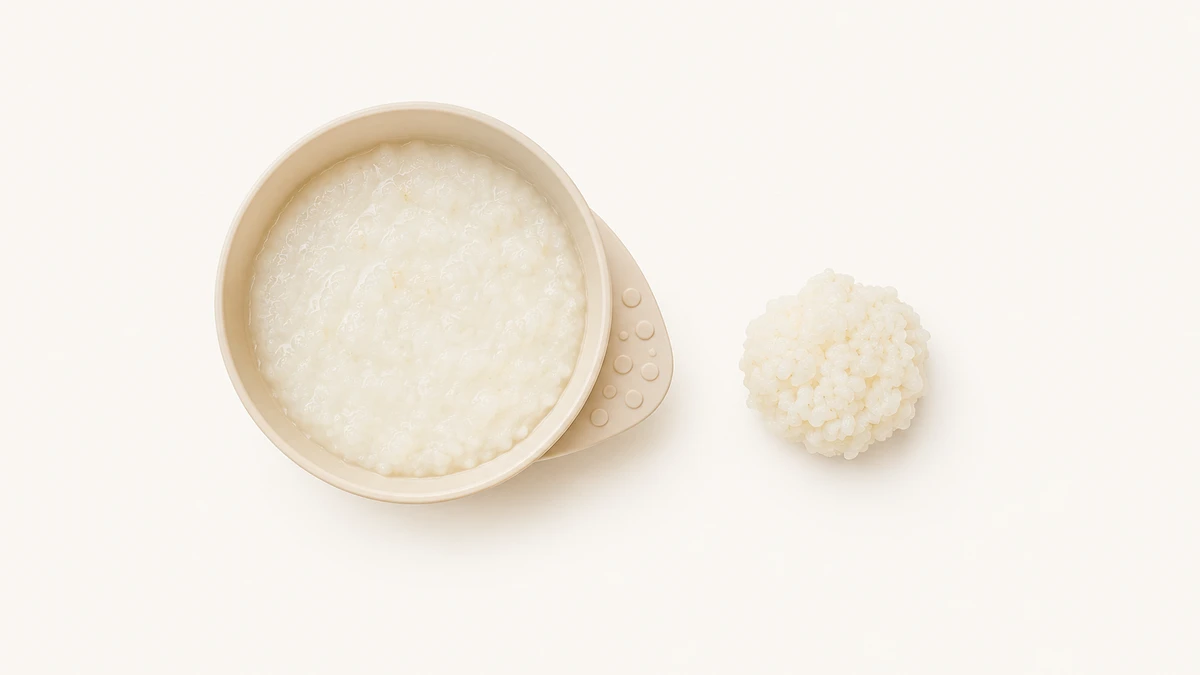
Soft congee or large soft rice ball
Spoon-fed, or a soft ball about 1 1/2 inches
Serve rice soft and easy to scoop. Cook it down into a thick congee or porridge, or stir moist cooked rice into sauce, broth, or mashed vegetables so the grains hold together. Pre-load a spoon and hand it to baby, or shape soft cooked rice into a large ball they can grip and gnaw.[1]
How to cook
Cook white rice about 15 to 20 minutes and brown rice about 25 to 30 minutes, until very soft. For congee, simmer 1 part rice to about 5 parts water for 30 minutes or more until thick and smooth. Rinsing rice first and cooking it in plenty of extra water helps lower its arsenic.[3]
9+ months old
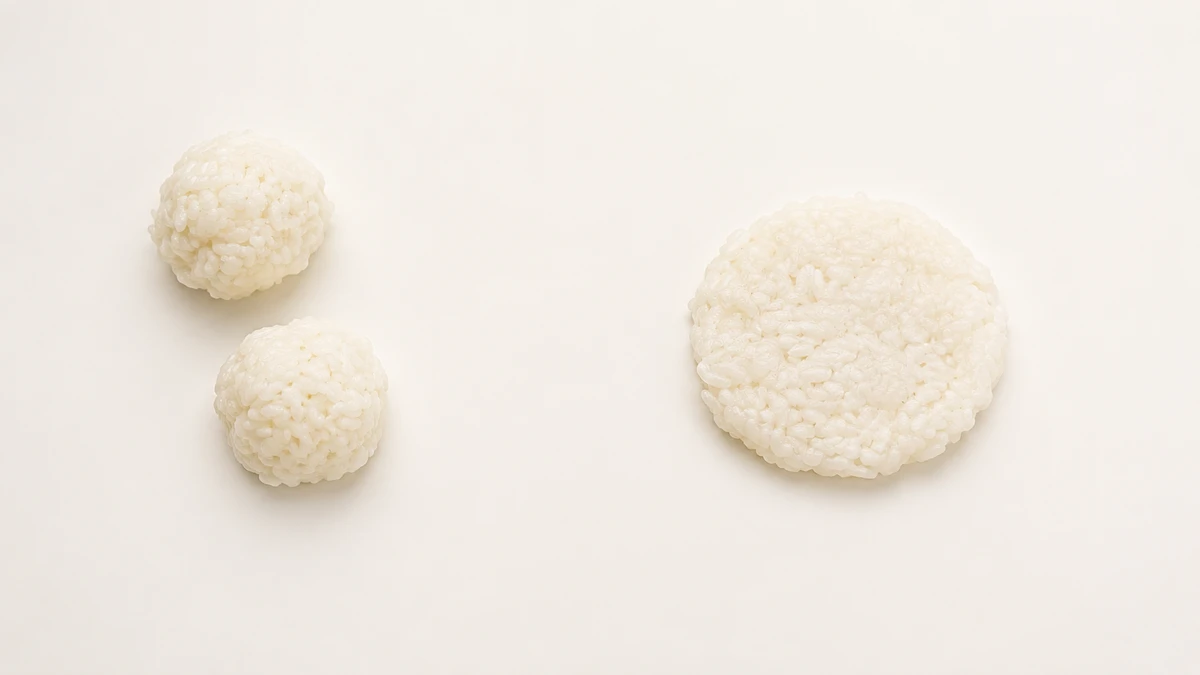
Soft rice balls or patties
Offer moist cooked rice plain, pressed into balls or patties baby can pick up, or stirred through a soft family dish. Flattening the grains with the back of a fork helps them stick together for easier self-feeding. Sticky short-grain or sushi rice is simplest for little hands to grab.
How to cook
Cook until soft and slightly sticky so the grains cling together. It can be a touch more textured now as baby gets used to lumps.
12+ months old
Soft rice, plain or in dishes
Serve rice as part of family meals, plain or stirred through dishes like risotto, stir-fries, or mild curries. Offer a fork for practice and pre-load as needed; it's fine if your toddler still prefers hands. Making the rice a little stickier and moister gives them more success with a utensil.
How to cook
Cook to your preference, fluffy or sticky.
Sources
- When, What, and How to Introduce Solid Foods - CDC
- Food Allergies (the 9 major US allergens) - FDA
- Action Level for Inorganic Arsenic in Infant Rice Cereals - FDA
- Arsenic in Food and Dietary Supplements - FDA
- Arsenic Exposure (vary infant grains beyond rice) - AAP
- Rice, white, long-grain, regular, enriched, cooked (FDC 168878) - USDA FoodData Central