 HeySolids
Can babies have nori or seaweed snacks?
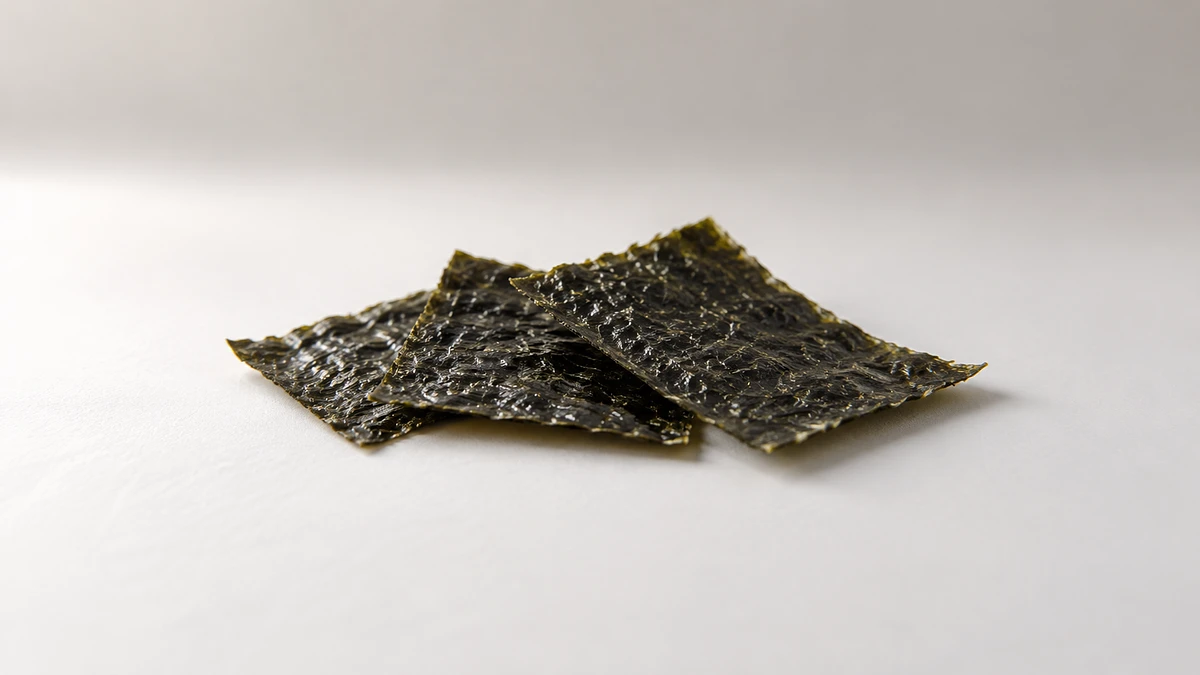
Yes, from around 6 months, crumbled over rice, mash or avocado, or toasted until crisp enough to shatter. Nori is the thin, dark-green sheet used for sushi and sold as roasted seaweed snacks. It’s one of the lowest-iodine seaweeds: a sheet has tens of micrograms of iodine, while a single gram of kelp can have thousands. Keep it to a small amount.[1][2]
There are two things to watch. Wet nori turns gummy and can stick to the roof of a baby’s mouth, so crumble or toast it rather than handing over a whole square. And seaweed snacks are nori brushed with oil and salt. Babies shouldn’t have added salt in the first year, so use plain sushi nori, which has no added salt, or pick the lowest-sodium snack pack and keep the portion small.
Kelp, kombu, wakame, dashi, kelp powder and hijiki are different. They’re much higher in iodine, and hijiki is high in inorganic arsenic, so Canada’s food safety agency advises avoiding it altogether.[1]
Choking risk
Nori is a moderate choking risk - a dry sheet turns gummy once it meets saliva and can stick to the roof of the mouth or the back of the throat as a wad, which is a different hazard from a hard food but a real one.
Crumble nori into food or toast it until it shatters, and offer water alongside a snack sheet. See how to serve for age-by-age prep.
Allergens
Nori is not a common food allergen, so a true allergy to it is rare.[3]
Two label notes: seasoned seaweed snacks and furikake-style sprinkles sometimes contain sesame, fish or shellfish (bonito flakes, shrimp), and seaweed is harvested and dried alongside shellfish, so "may contain" warnings are common on packs. If your baby has a fish or shellfish allergy, choose plain sushi nori from a brand that labels clearly.
Start with a small amount and watch for a reaction.
If baby refuses
Toasted nori is usually the way in - it's crisp, salty-savory and melts on the tongue. Crumble it over foods baby already likes, such as rice, avocado or egg, before offering a piece on its own. If the wad-in-the-mouth texture puts them off, go back to flakes for a while.
Food safety
Salt comes first. Roasted seaweed snacks are made from nori, oil and salt, and the sodium per pack varies a lot between brands. Babies shouldn’t have added salt in the first year, and only a little after that. Plain sushi nori has no added salt, so that’s the one to keep in the cupboard.[4]
Iodine is the second thing to watch, but nori is the easy case. It’s one of the lowest-iodine seaweeds, so a sheet or two a day stays well under the 200 µg daily upper limit for toddlers. The problem is the brown seaweeds, like kelp, kombu and wakame, and anything made from kelp, which can go over that limit in a single serving. There’s no set upper limit for babies under 1, which is one more reason to make nori the only seaweed in the first year.[1][5]
How to serve
6+ months old
Nori crumbled into soft food
A pinch of flakes stirred in
Crumble a little plain nori into rice, mashed potato, avocado or a thick puree so it disappears into the texture - no whole sheets yet, since a wet sheet turns gummy and can stick in the mouth. Keep to about a sheet across the day, and make nori the only seaweed for now.
How to prepare
Hold a plain nori sheet over a dry pan or a low burner for a few seconds until it crisps and darkens, then crush it between your fingers into flakes. Unseasoned sushi nori has no added salt; seasoned snack sheets do.
9+ months old
Toasted nori pieces to pick up
Thumbnail-sized crisp pieces
Small pieces of toasted nori are good pincer-grasp practice. Use plain nori only, not seaweed snacks, and keep the amount small.
How to prepare
Toast a sheet of plain nori in a dry pan until it snaps, then break it into pieces about the size of a thumbnail. Offer a few at a time. Nori softens quickly in the mouth and can stick, so offer sips of water from an open cup during the meal.
12+ months old
Strips, or a snack pack in moderation
Strips, or 1-2 snack sheets
A toddler who chews well can handle a strip of nori or a sheet or two from a snack pack - cut into strips rather than handed over whole, with water alongside, since a wet sheet still sticks. Choose the lowest-sodium brand; a whole pack every day is more salt than a toddler needs. Nori-wrapped rice balls and sushi rolls with cooked fillings work well now.
How to prepare
Cut snack sheets into strips with scissors. For rice balls, press cooked rice into a small ball and wrap in a strip of nori; the nori softens against the rice and is easier to bite through.
Tips
- Nori sheets get gummy when wet. A strip that sticks to the roof of the mouth is the real-world hazard. Crumble sheets over rice or mash, or toast them crisp so they shatter, rather than handing over a whole square to suck on.
- Snack packs are nori brushed with oil and salt. Look for the lowest sodium per serving and keep a baby's share to a sheet or two. The plain, unseasoned nori sold for sushi has no salt added at all.
Sources
- Iodine Fact Sheet for Health Professionals (UL 200 µg/day at 1-3 years; seaweed content varies widely) - NIH Office of Dietary Supplements
- Seaweed, laver (nori), raw - USDA FoodData Central
- Food Allergies (the 9 major US allergens) - FDA
- Foods and Drinks to Avoid or Limit (honey, added sugar, salt) - CDC
- Seaweed and iodine: brown seaweed no more than one serve a week for children (FSANZ advice) - Food Safety Information Council
- Choking Hazards (Infant & Toddler Nutrition) - CDC