 HeySolids
Choking risk
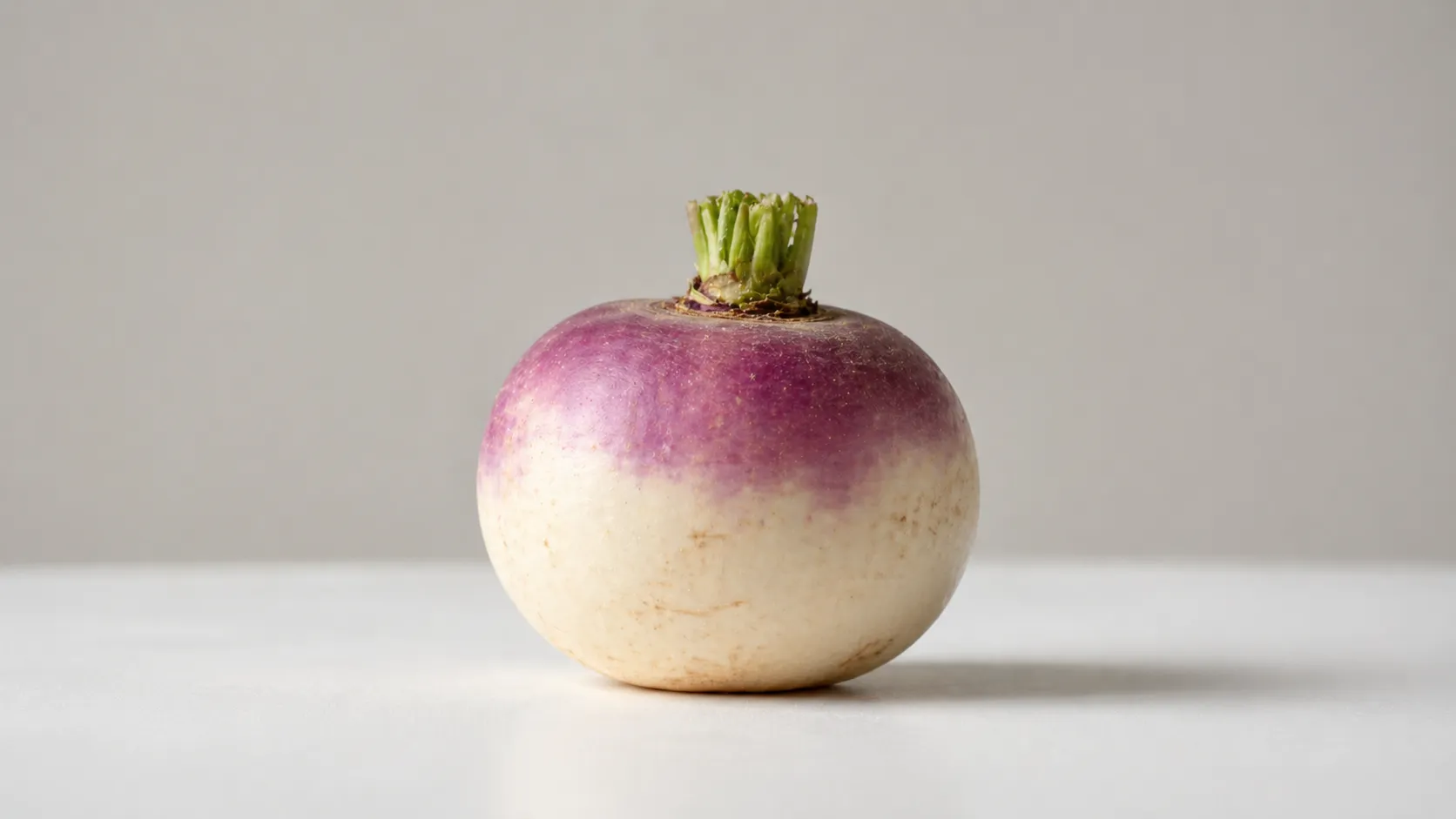
Turnip is a moderate choking risk - raw or undercooked, it's hard and crisp, and firm pieces are the hazard.
Peel it, cook it until a piece presses easily between two fingers, then serve smooth mash or large soft batons.
Skip firm chunks and round coins. See how to serve for age-by-age prep.
Allergens
Turnip is not a common food allergen, so a true food allergy to it is rare.[3]
Start with a small amount and watch for a reaction.
If baby refuses
Roast it for more sweetness, or mash it with a food baby already likes such as potato, carrot, or sweet potato to soften the peppery taste. It can take many tries before a new flavor is accepted, so keep offering.
How to serve
6+ months old
Large soft baton or smooth mash
Finger-length batons, about 2 to 3 inches
Offer a large peeled baton of cooked-soft turnip for baby to hold, or mash it smooth and serve it on a spoon. Turnip blends well with other roots - a turnip and carrot or turnip and potato mash softens the flavor. If a piece breaks off, stay calm and give baby a moment to move it forward.
How to cook
Peel, then steam or boil for 15 to 20 minutes, or roast at 400°F for 25 to 30 minutes, until very soft - dense pieces take longer. It's done when a piece presses easily between two fingers. Thin mash with a little cooking water.
9+ months old
Small soft pieces
About 1/2 inch, pea- to bite-sized
Cut soft-cooked turnip into small pieces for pincer-grasp practice, and keep offering a larger baton alongside if baby struggles with small pieces. It also works as a mash with a little texture, mixed with potato or carrot.
How to cook
Roast at 400°F for 25 to 30 minutes for more sweetness, or steam until tender - turnip holds its firmness longer than potato, so give it the full time. It's done when a piece presses easily between two fingers.
12+ months old
Small pieces or soft wedges
Bite-sized, about 1/2 to 1 inch, or soft roasted wedges
Offer soft roasted pieces or wedges alongside a fork for utensil practice. Turnip slots easily into family meals now - mashed, roasted with other roots, or stirred into stews and soups - and mild spices like cumin and nutmeg pair well. Keep it cooked soft: raw turnip is still too firm to chew.
How to cook
Roast wedges at 400°F for 25 to 30 minutes until soft and caramelized, or boil and mash. Bigger pieces and crisp roasted edges add texture as chewing improves - the pieces themselves stay soft. It's done when a piece presses easily between two fingers.
Tips
- Pick small turnips. Golf-ball to tennis-ball sized ones are sweeter and milder - big turnips are older, woodier, and where the bitterness lives. If it feels heavy for its size, that's a good sign.
- Cook it with something sweet the first few times. Roasting with carrot, apple, or a little olive oil rounds off turnip's peppery edge - a gentler introduction than plain boiled turnip, which is the version most likely to get a refusal.